Tuesday, January 13, 2009

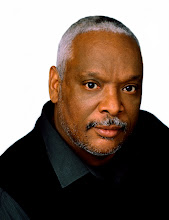
Should We Be Happy for Bishop Robinson?

By Mark Riley

So what if it looks like a bone to the gay community. President-Elect Obama's invitation to Episcopal Bishop Gene Robinson to deliver the invocation at a pre-inaugural event is a good thing.


It at least shows Obama's paying attention. Frankly, I still have problems with having Rick Warren being asked to play a central role in the inauguration itself.


Warren, the pastor of a California mega-church, has been asked to open the swearing in next Tuesday. He was also an enthusiastic supporter of Proposition 8, the gay marriage ban that passed last November. No matter. Bishop Robinson says his inclusion isn't a reaction to the anger that swept the gay and lesbian community at the news of Warren's role. We should believe him, I guess.

I had the privilege of interviewing Bishop Robinson not long after he was consecrated by the Episcopal Church. That act in 2003 caused a growing rift in the Anglican Communion, parent body of the Episcopal Church. Bishop Robinson struck me then as a humble man with a fine tuned sense of humor, precisely the kind of person who would make a great bishop in the church I had rejoined after more than 30 years.

You'll note (I hope) that I haven't referred to Bishop Robinson as "The openly gay Bishop". That's because it seems everyone else in the media does, and I'm sick of it. Bishop Gene Robinson shouldn't be defined by his sexuality and more than Rick Warren is. Nobody refers to him as "The openly straight Pastor", nor should they.

Unlike a lot of other clergy, Gene Robinson has publicly admitted his human frailty, having been in a 12 step program for alcohol addiction. He says the language he'll likely use in his invocation Sunday will come from what he learned there. That all his colleagues in the Episcopal Church haven't embraced him is a travesty. In my brief time with him, however, I didn't detect any real anger at the people who have shunned him.

I have learned that lesson from other clergy in my own church, both gay and straight. They seem to have remarkable patience in the face of their enemies, far more than I think I could muster if I were in their shoes. In that context, the inclusion of Bishop Gene Robinson isn't just a good thing, but a triumph.

I just wish Barack Obama would switch the roles at the inauguration of Bishop Robinson and Pastor Warren.

What do you think?

Monday, January 12, 2009

Transparency, Anyone?

By Mark Riley

NB: From now on, this blog will be updated daily. I thought (silly me) I needed to concentrate on doing longer pieces fewer times a week. I now know better.

If there's been one single news item that should outrage hard working Americans, it's the one that says banks can't or won't tell anyone what they've done with the first chunk of the federal bailout money. We were told this was central to keeping the economy afloat. Yet nobody seems to know where the money went. As is the case with a lot that goes on inside the Beltway, there's plenty of blame to go around on this one.


Imagine for a moment you, a person working every day to make ends meet, complete the mountain of paperwork needed to actually get a loan from your financial institution. Then imagine what would happen if you couldn't (or refused) to tell the bank what you did with the money. It's called fraud if you do it, but US financial institutions seem to be getting away with just that.

You may remember last fall Treasury Secretary Hank Paulson told us the sky would fall if our financial institutions didn't get help to the tune of $700 billion dollars.


He managed to scare the Congress into giving it to him to dole out without oversight. And that's just what we've got: No oversight whatsoever. I'm not saying this. A GAO report says Treasury doesn't even know.

The banks aren't the only ones to blame here. To them, this money must seem like a windfall. Congress itself must bear some of the responsibility for this mess. They, after all, said yes to the the bailout request. Now, after the fact, they seem to be concerned. Now they want answers.

They should have demanded them before releasing the first half of the money. Now the incoming Obama Administration wants to free up the other $350 billion dollars. Unlike Bush, Obama has sense enough to demand some sort of accountability this time around. Yet even that shouldn't suffice. What about the first outlay. Are we ready to watch hundreds of billions of dollars float away without demanding answers?

Millions of Americans lost their jobs last year. Not only are homeowners facing default, renters are looking at increases they have no means to pay. It's ordinary Americans who are catching hell! "I dunno" isn't good enough when it comes to taxpayer dollars. Obama should demand a full accounting of all monies spent since last fall by the financial institutions that got help. Any hesitancy on their part should be met with the threat of criminal prosecution.

It's time to stop playing with the Masters of the Universe. They got us into this mess. They shouldn't be able to escape their responsibility to at least be transparent. Should they?

Friday, January 9, 2009

Want to See Change You Can Believe In? Try New York!

President-Elect Barack Obama Thursday spoke to the nation's deep economic woes with a plan involving tax cuts and stimuli to the tune of $775 billion dollars. Already, some of his allies in the Senate are picking it apart, and some commentators say it's not enough. Hey, Rome wasn't built in a day!

Obama is trying to create the change he talked about so often in his campaign, that is, a change in the nation's sense of itself. Yet, as I found out quite by accident last night, there's change, and then there's the change you feel when you walk through a New York City neighborhood that used to be your stomping grounds.

I had a meeting with a friend at a spot on Manhattan's Upper West Side.


As I came out of the subway, I realized I was early, way too early to expect my friend to be at our meeting place. So I decided to walk around a little. I headed up Broadway, past buildings that were so familiar, but their ground floor storefronts had changed, and changed profoundly.

The diner that used to sit in the middle of one block was long gone. It became famous as the source of a recurring skit on Saturday Night Live. Also gone was the movie house that was one block up. The Shopwell supermarket, the Ideal restaurant, the hot dog joint on the corner of 110th St. all a part of my distant past. When I started walking, my steps had no real destination in mind.

Yet as I kept on, I knew where I'd end up up. It was the block, 109th St. between Broadway and Amsterdam Ave. Once upon a time, it was my second home.


Suddenly, names I hadn't thought about in years came flooding back. So too did the incredible diversity that neighborhood came to represent, and still does, despite the obvious changes. Gus, and his brother Victor lived in the building on the corner. Ricky, the only Venezuelan on the block, lived a couple of doors down. I passed a small playground, and remembered that my boys Clean Gene and Sailor 109 got busted there, for what I can't even remember.

And then, even though at first I couldn't remember the exact building, I saw number 215. That was where Juan and his mother Carmen lived, along with the Castro brothers. There was a time we considered it our building, even though we didn't live there. Carmen always opened her apartment to us, and it was there that I learned to love Latin music in all its forms. On Saturday nights we would set out from that apartment on the second floor, sometimes three or four of us, sometimes a dozen.

There was Johnny the Gambler, Shorty, Spongy, Monkey, Candy, Jamie,and of course, my closest friend Wilfred. We'd set out for parties uptown, in the Bronx or Washington Heights. And always, we'd end up at four or five o'clock in the morning back at 215. Now, in real time, I stood looking at my past.

I continued on to the end of the block, then headed back down Amsterdam Ave. Where once the street was dotted with bodegas and small Dominican businesses, change had come as well. Some of the same stores where I used to buy my favorite soda (Good-O Cola Champagne. 39 cents a quart) were still there, but now they co-exist with bistros featuring exposed brick and flat screen televisions, most tuned to either CNBC or ESPN (sports or bad economic news, take your choice). I'd resolved to head back toward my meeting, but again my mind turned my feet toward one more place.

I headed east, across 108th St., where the schoolyard behind the Booker T. Washington Jr. High School (or just plain Booker T) stretched almost half the block. Across the street from that yard was a small vest pocket playground we used to call "The Little Park". For some reason, I had to see it again. And there it was, now called "The Anibal Aviles Playground". A large Parks Dept. sign proclaimed "This Park Closes at Dusk".

The benches were still in the back, but it was wishful thinking to believe they were the same ones we used to sit on and solve
the problems of the world. The place was empty, as it should have been since it was well after dark, but still, I drifted back to nights we'd be there, even in the cold, talking, cracking on girls passing by, sharing various libations (don't ask), and trying to figure out what to do with our young lives.

It was getting close to the time of my meeting. I turned, crossed the street, and walked back toward Broadway. The neighborhood had changed, as does just about everything in New York.


The people I spent those times with many years ago are long gone, just like the Olympia Diner. But the mist of memory remains, time stamped in a corner of your brain.

As the nation seeks change, it's good to remember, even on a cold New York City night.

Leave a comment - what are your memories of the area you grew up and how it's changed?